How Do the Seasons in Eagle Pass Wear on Walls and Ceilings?
Weather does a lot of the damage that ends up as a drywall repair. Eagle Pass has a hot semi-arid climate, with August the hottest month on average and a record high of 115 degrees, set in both 1916 and 1944. Rain is modest, a little under 21 inches in a typical twelve months, and most of it falls from spring through fall.
Each season leaves a different kind of mark indoors. This guide walks through them in order, so you know what to check and when. None of it is cause for alarm, and most of it is easy to keep on top of.
Why do cracks show up when the weather turns wet again?
Through a long dry stretch, the ground under a house gives up moisture. When storm season returns and the soil takes on water, it does not move evenly. A slab can rise or drop slightly at one corner, and the walls above respond.
The signs are new diagonal cracks off door and window corners, a door that starts to bind in its frame, or a tape seam that suddenly shows a line. Check your door corners after the first big rains of the season. A hairline crack is a simple repair. A crack that grows wider each month deserves a foundation check first.
What does a long, hot summer do to the inside of a house?
Average highs sit in the upper 90s in July and August. Air conditioners run nearly nonstop, and that is when condensate lines clog and drain pans overflow. The result is a tea-colored stain overhead, below the air handler, often in a hallway or closet.
Attic heat is the other summer factor. Framing and board expand and contract with each hot day and cooler night, which can open seams where the ceiling meets the wall. Before the hottest weeks arrive, have the AC drain line flushed and look at the ceiling below the unit.
Why do stains appear after a spring or fall storm?
Storms here can arrive hard and fast. A strong wind lifts shingles, and heavy rain pushes water under flashing and around roof vents. Spring weather can also be dangerous: a tornado struck just outside Eagle Pass on April 24, 2007.
Most storm damage indoors is quieter than that. Look for new rings on the ceiling, paint that bubbles, or a soft spot near an outside wall within a few days of heavy rain. Stop the leak first, let the board dry, and then decide whether it needs sealing or replacing.
Does a cold snap ever matter here?
Not often. Winters are mild and drier, but freezes do happen; the record low is 10 degrees, from 1962. When a hard freeze does come, the risk is a pipe in an outside wall or attic. A burst line can soak a wall or ceiling in a short time.
If a freeze is in the forecast, open cabinet doors under sinks on outside walls and keep the heat on. After it passes, look for damp spots or bulges along those walls.
How does weather affect the repair itself?
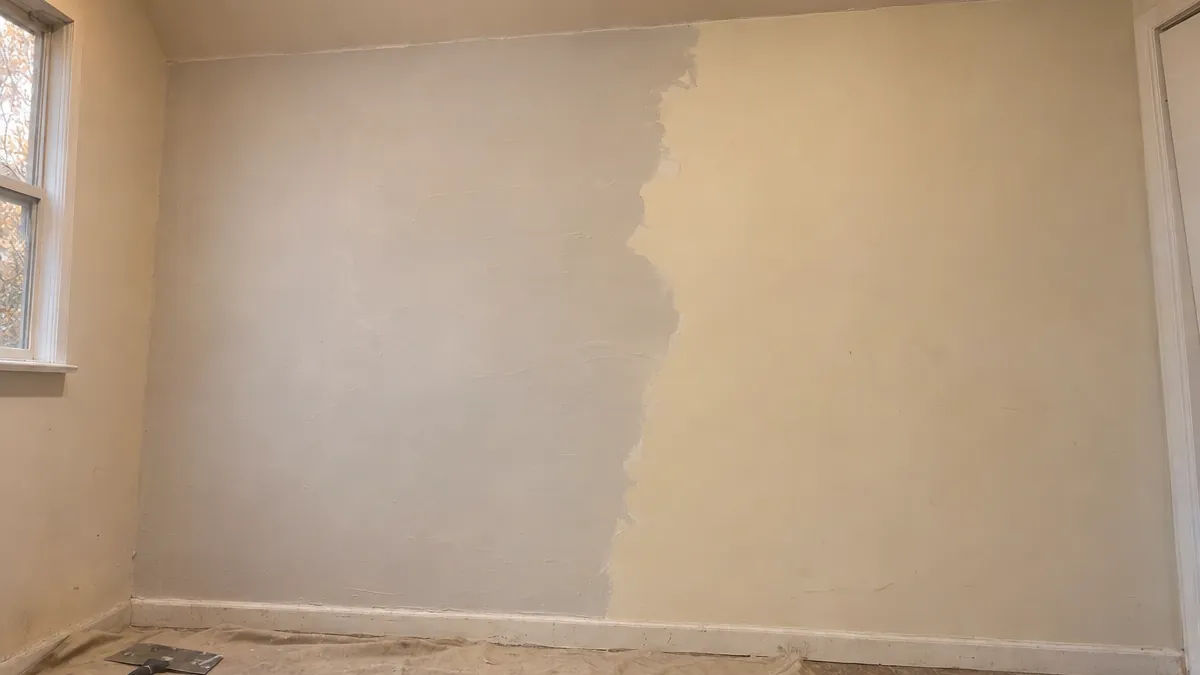
Weather changes the work, not just the damage. Joint compound dries faster in hot, dry air, which helps a job finish sooner but leaves less time to work a knockdown texture. A skim coat across a full wall, like the one in the photo above, has to be spread and smoothed before it starts to set.
On humid, rainy stretches, drying slows down and the gap between coats gets longer. Keeping the AC running during a repair helps either way.
What should you check as the seasons change?
| When | What to check |
|---|---|
| Late spring | Flush the AC condensate line before summer; look at door corners after the first heavy rains. |
| Summer | Watch the ceiling under the air handler; note any seam lines where walls meet the ceiling. |
| Fall storms | Check ceilings and outside walls a few days after a big storm for rings or bubbling. |
| Winter | Protect pipes in outside walls during a freeze; look for damp spots after it passes. |
Found something on your walk-through? Take a photo and send it along. Next, a local pro can tell you whether it needs a repair now or can wait.
More reading lives on the guides page.
Spotted a crack or stain on your walk-through?
Send what you found and a local pro can tell you what it needs.
Call 7 days, 7am–9pm
Once you reach out, a local pro sizes up the job and gives you a number before anything gets cut or sanded.